Our next post…
Exterior Shutters for Historic Homes
exterior shutters for historic valley forge

Do you need help with finding the right design for your interior or exterior shutters or even your interior doors?  We can help.

Subscribe
Browse Older Posts by Category
        ShareThis

Archive for the ‘Closet Doors’ Category

Can I Use 2 Different Styles of Closet Doors Together?

Simply put…Yes.  While we make doors that are a combination of different styles ( louvers over panels, mirrored over bead board, operable louvers over fixed louvers and more ) you can also use different types of doors in the same opening.

Reasons for Mixing and Matching Door Styles

Combination of Colonial Raised Panle and Mirror Sliding Doors

The most common reason to consider combining doors with different styles is if you are using mirrored closet doors.  Sometimes an entire wall made up of mirrors can be a bit overwhelming.  The doors to the left show how a single, central door was made with a mirror while the outer doors are a more formal raised panel design.

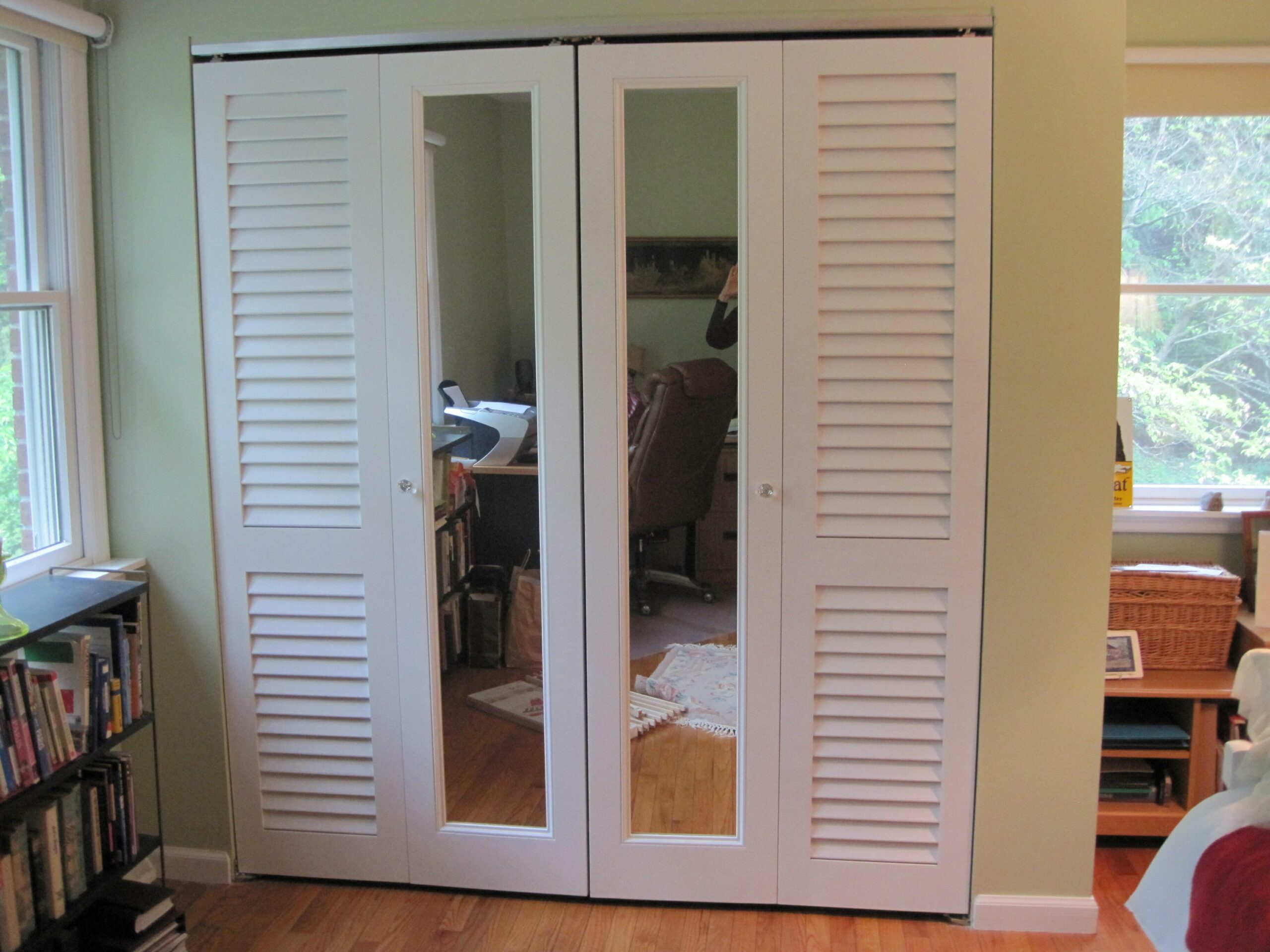
Below is another example.  Louvered doors were needed for ventilation in the closet.  The homeowners, however, wanted mirrored doors to help with getting ready in the morning.  By using both styles of closet doors they were able to get exactly what they needed and wanted.Louvered Closet Doors with Mirrors

What Styles of Closet Doors to Use

Any style of closet door can be mixed with another.  Really the best thing to do is stand in front of your closet and think about how it will be used.  For example, will it be used for housing equipment that might need ventilation or maybe sound proofing.

Next, think about how you want the closet doors to look.  Louvers for a more relaxed or beachy/Caribbean feel.  Tongue & Groove or Beadboard to make things look taller.  Flat panels for a Mission style home.  Whatever look you are going for you can then mix the different styles of closet doors to get that look and the use that you need.

If you are not sure what styles will work, you can always give us a call, send us an email or start an online chat. We are happy to help.

What Are Faux Louvered Doors?Faux Louvers vs. Fixed Louvers

With fixed louvered doors the louver blades are fixed at an angle and spaced far enough apart so that there is a gap.  This is so they provide privacy while still allowing airflow.  With Faux lovered doors the louver blades are shaped like a chevron and stacked.  This gives you the look of fixed louvered doors while blocking sound and airflow as well as sight.

Applications for Faux Louvered Doors

Since faux louvered doors give excellent privacy some of the applications are for guest room doors, bathroom doors and maintenance doors.  Keep in mind, however, that since faux louvers block all air flow they should not be used where ventilation is required such as around air handling, refrigeration and  media equipment.

Available Sizes & Costs

As with all of our other designs of shutters and doors, our faux louvered doors are available in any custom size.  We offer faux louvers in 3 different sizes; 1.7/8″, 2.1/2″ and 3.1/2″.  All of which can be installed as hinged, bifold, sliding or pocket doors.

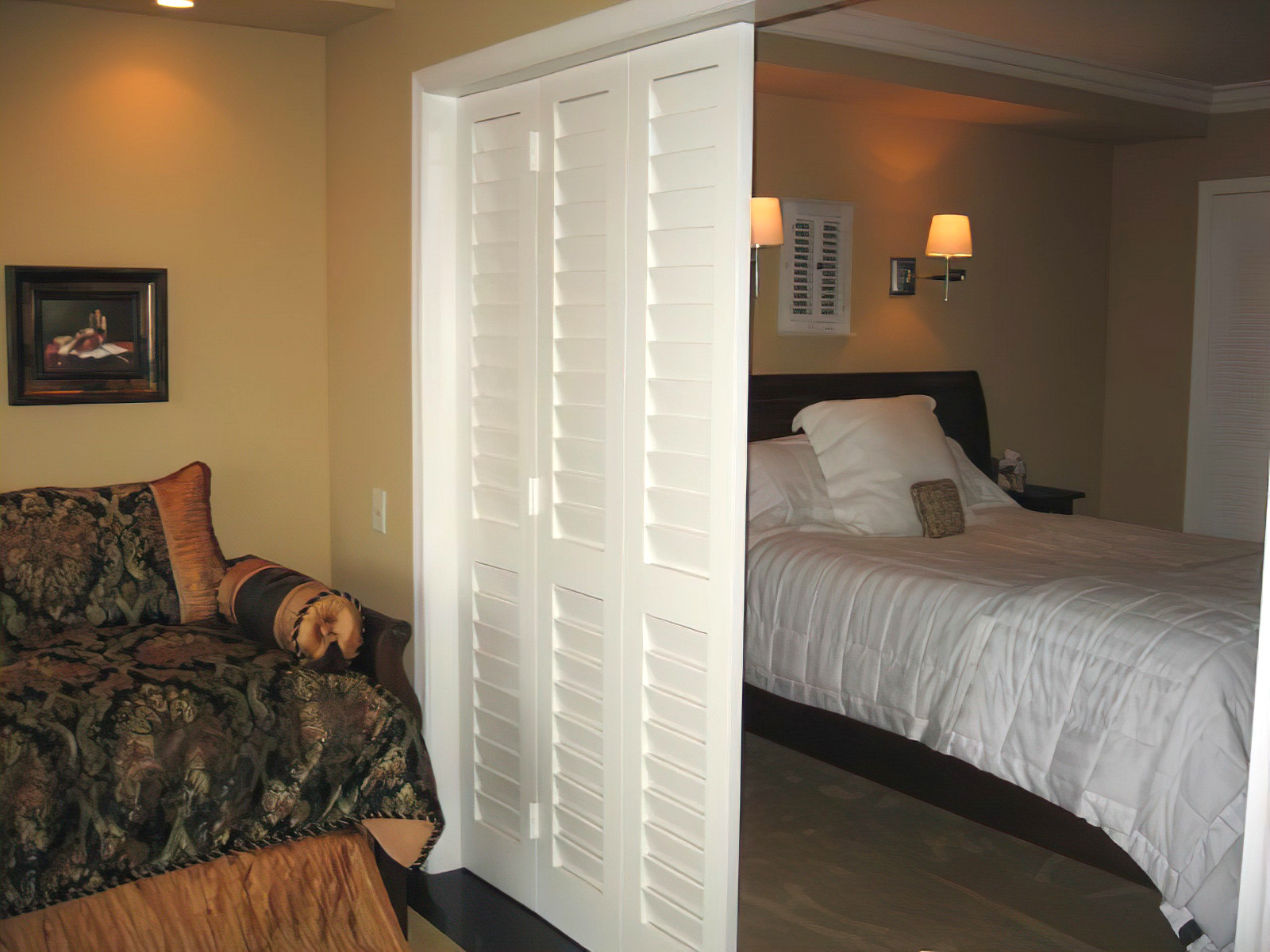
tri-fold louvered doors


custom size door quote


If you are not sure if faux louvered doors will work for you please ask. Give us a call, send us an email or start an online chat. We are happy to help.


What are the differences between Interior Doors and Closet Doors?

We often receive emails and phone calls asking us which doors can be used as closet doors and which can be used for interior doors between rooms.  Many people are concerned that there may be some reason why the same door should not be used in both places.

Hinged doors with wider stiles to hold knobs

Hinged doors with wider stiles to hold knobs

Door Designs

The truth is that all Kestrel designs of closet doors and interior doors are interchangeable.   This means that you can have your interior doors match your closet doors throughout your home.    Something to keep in mind, however, is that some designs may be more practical for certain types of rooms or closets.   Operable and Fixed Louvered Doors for ventilation.  False Louver,  Tongue & Groove and Panel Doors for sound insulation.  Glass and Mirrored doors to help brighten dark rooms.  There are also doors that combine designs to offer a bit of each.

Door Thickness and Stile Width

The stiles of a door (not “style”) are the vertical frame parts of the door.    On interior doors between rooms it is not uncommon to see wider and thicker stiles.  This is because most  locks and door knobs require a hole drilled right through the door.  The thicker door and wider stiles allow this while keeping the door itself structurally sound.  On closet doors the overall thickness and stiles can be narrower since locks and handles are not usually required.

Door Hardware

There are 4 basic types of hardware for doors.  Hinged doors, pocket doors, bifold doors and sliding doors.  With closet doors all 4 types of hardware are used consistently depending really only on how you plan to use the closet.  While with interior doors we normally see hinges it is still common to use bifold, sliding and even pocket door hardware used.  Below are two good examples.

Traditional bifold door hardware is used to separate two rooms within a church.

Traditional bifold door hardware is used to separate two rooms within a church.

sliding louvered doors to lanai

Operable Louvered Doors use sliding door hardware to close off a lanai.

If you are not sure which door designs and options will work best for you please ask us. Give us a call, send us an email or start an online chat. We are happy to help.

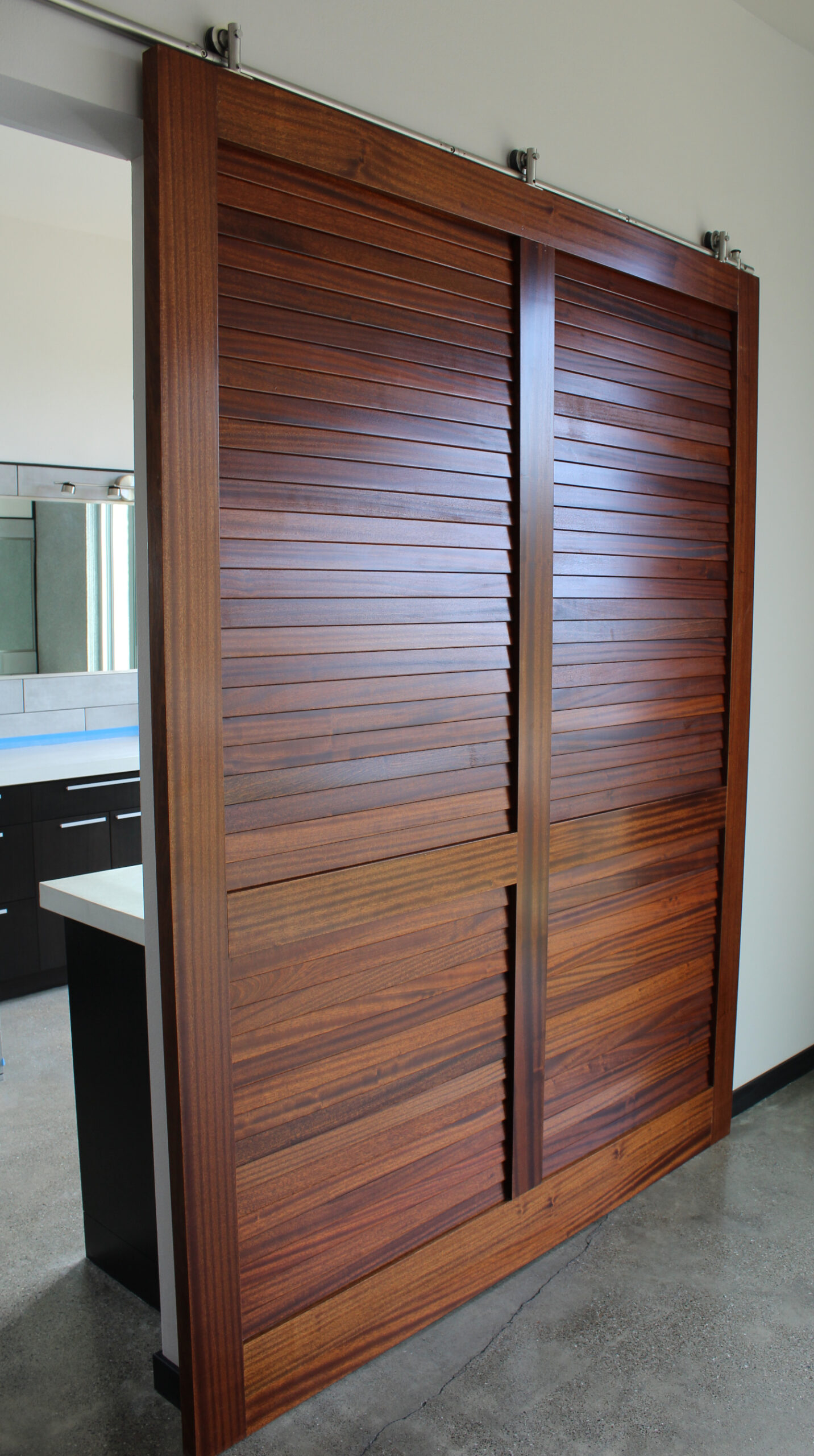
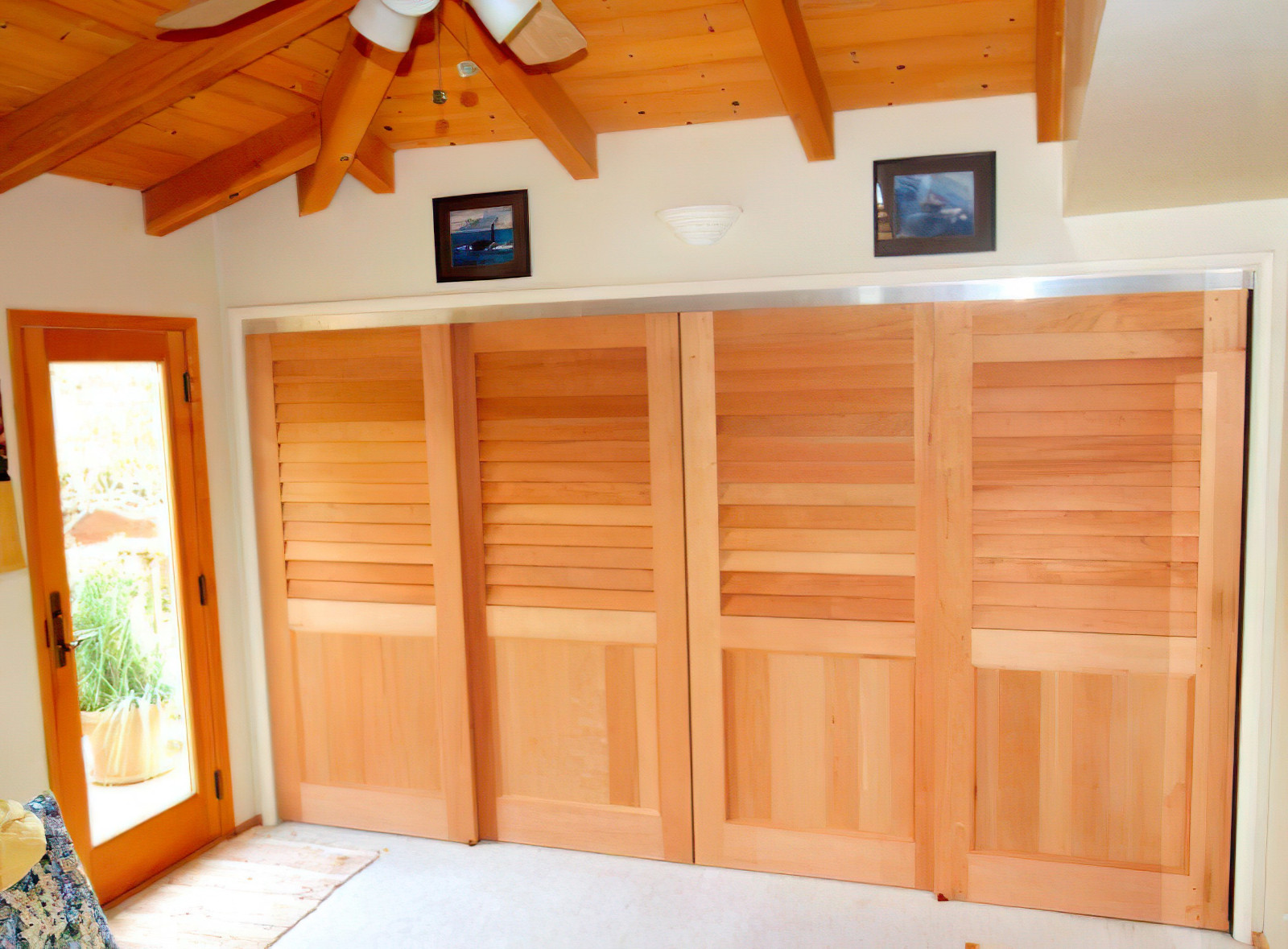
Sliding Closet Doors made from Spanish Cedar

Sliding Closet Doors made from Spanish Cedar

Bifold Doors or Sliding Closet Doors; Which Cost Less?
When buying new closet doors most people look for a way to save money without compromising on quality. One way to do this is to consider the cost differences between sliding closet doors and bifold doors.

How Many Doors for Your Closet?
We custom make all of our doors to the custom sizes that you need. The time involved to make an 18″ wide door is about the same as that needed for a 36″ wide door. This means that the fewer individual doors that you have covering your closet, the lower the cost. So if your closet is 72″ wide, using 2 doors, each 36″ wide, will cost less than using 4 doors, each 18″ wide. Since wider doors are typically hung as sliders this does make sliding closet doors less expensive.

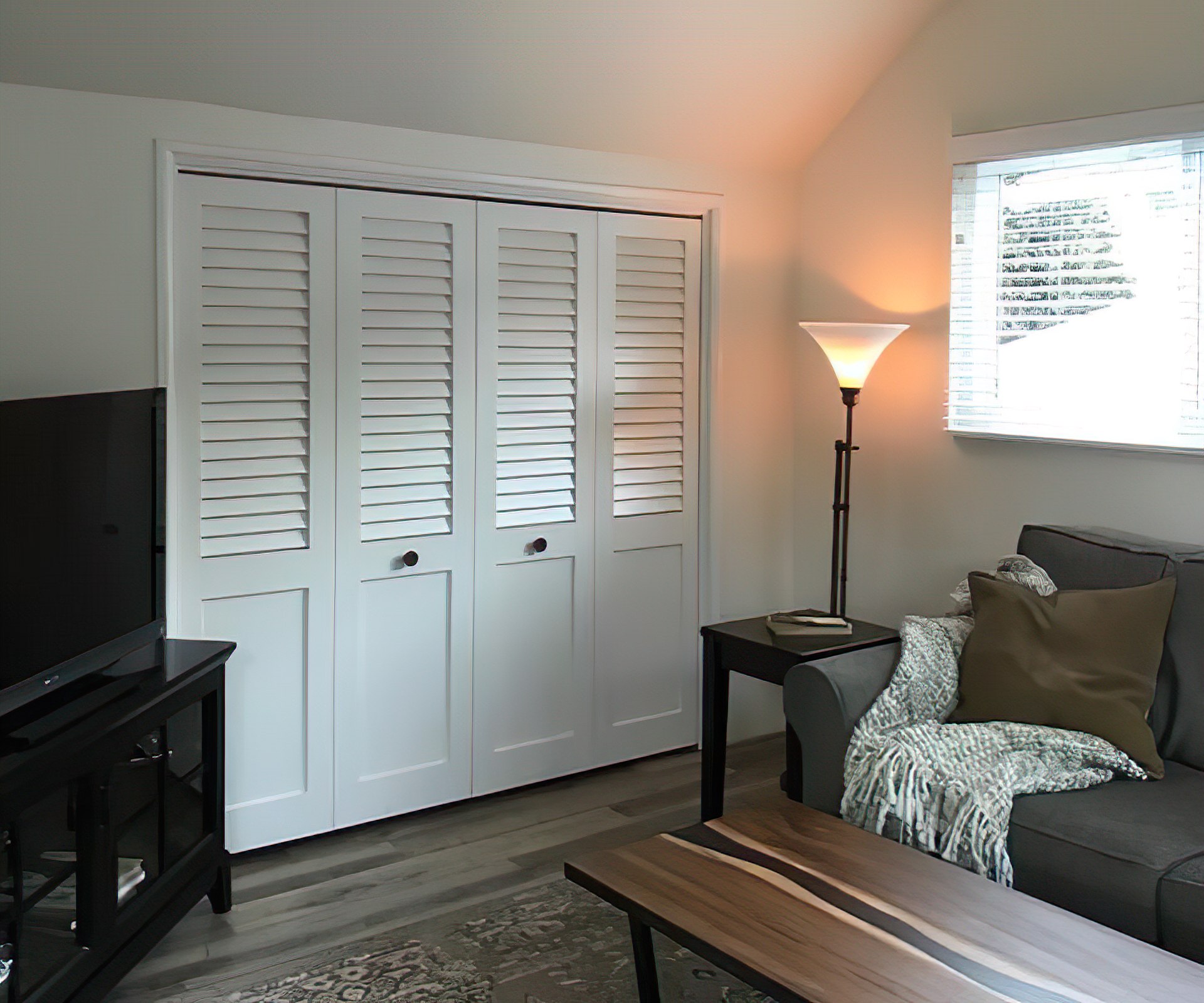
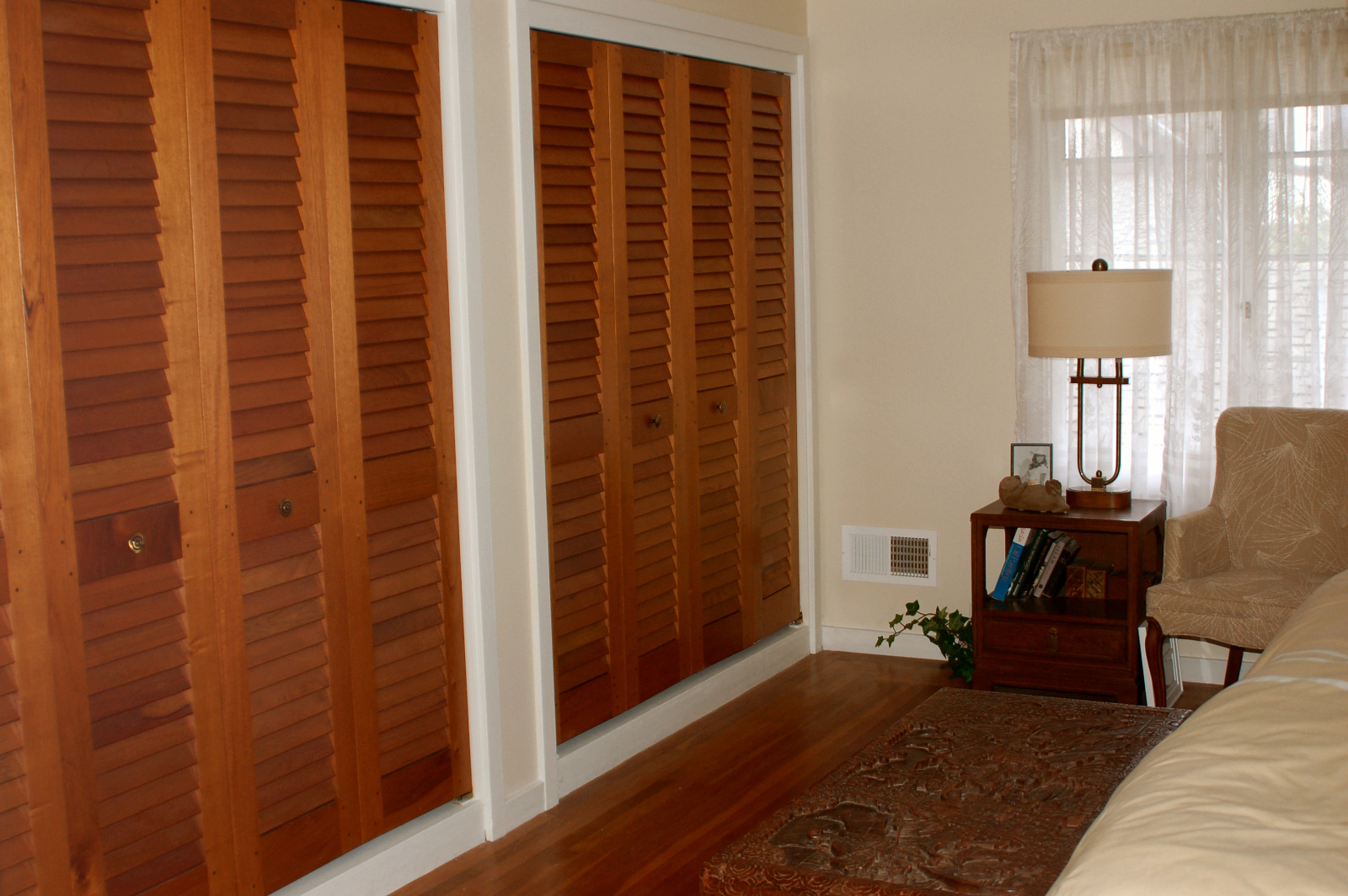
bifold closet doors with 3.1/2" louvers

Bifold Closet Doors with 3.1/2" Louvers

What if Bifold Doors Are My Only Option?
If your application requires bifold doors you can still keep costs down. We also offer the 200FD line of bifold door hardware by Johnson that can handle individual doors up to 48″ wide.

In the end it is not so much that sliding closet doors cost less than bifold doors. Instead it is keeping the number of individual doors to a minimum for your closet that keeps the price down.

If you are not sure how you want to hang your closet doors you can read one of older posts: Should I go with bifold or sliding closet doors?. You can also give us a call, send us an email or start an online chat. We are happy to help.


Closet & Door Openings Not SquareFramed opening for a closet door
It is not uncommon to have the openings for interior doors or closet doors be out of square. The reasons could be anything from the house settling to an uneven floor to stud walls and header being twisted. The good news is that in most cases it is easy to work around these issues.

Rough Openings vs Finished Openings
If the opening for your doors is still rough (not framed out) then it really does not matter if your opening is square or not. When you frame out the opening you will have a chance to square everything up. This is also the case if you are installing pocket doors. If you are not sure if your door openings are rough or not here is an earlier post that explains the difference. Interior Doors: A Rough Opening vs. A Finished Opening

Measuring for your Doors
The first thing you will want to do is measure the framed opening where you want your doors. It is a good idea to measure the width and height in a few different places. This will help to show you where, if at all, your framed opening is out of square. Another check is to measure diagonally across the opening. If the measurement from the top left corner to the bottom right corner is the same as the measurement from the bottom left corner to the top right corner then your framed opening is square. Here is a link to our site on How to Measure for Doors which will help. If you do find that your framed opening is not square there are ways to work around this.

Uneven Header
If you the header dips to one side or another, or if it has a “bump” in the middle there are a few things you can do. You can try and correct it be removing and re-installing the header. Most likely this will be more difficult and time consuming than the alternative. If you are installing sliding closet doors or bifold doors you can simply shim out the track to make it level. Any resulting gap can be easily covered with a valence or corner moulding. If you are installing hinged doors you have a choice. If the header only dips an 1/8″ or so you may just want to leave it be. However, if the gap is more noticeable you should consider removing the door casing and straightening the door jamb.

Uneven Floor
If your floor is uneven there is not too much that you can do other than rip up and lay down a new floor. Thankfully an uneven floor will not affect the way your doors work. It will just mean that you have more of a gap at one end of the bottom than at the other.

Side Jambs not Plumb
If your house has settled you will mostly likely find that the side jambs will not be plumb. You will treat this similar to how it was explained with the uneven header above; let it be if the gap is small or remove the casing and re-plumb the jamb. If you installing sliding closet doors or bifold doors the simplest thing to do is to let the gap stay and then apply a simple quarter round or corner moulding right in front of the doors along the side jambs. This will hide the gap and not interfere with the way the doors open and close.

Hopefully this post has been helpful. If you still have questions on how to work with your non-square openings for your doors just ask. Give us a call, send us an email or start an online chat. We are happy to help. quote form for custom sized panel doors


Spanish Cedar Sliding Closet Doors

Spanish Cedar Sliding Closet Doors

Track Hardware for Sliding Closet Doors
When it comes to choosing track hardware for your sliding closet doors the main decision is really about how many individual doors do you want on each track. Your options vary somewhat depending on whether you are going with 2, 3 or 4 sliding doors to cover your closet.

Applications with 2 Sliding Closet Doors
If you have 2 doors covering your closet then you have a choice of a 2 track system or a wall mount system. With the standard 2 track system (figure 1) the doors slide back and forth within the opening so you can access half of your closet at any one time. With the wall mount (figure 2) you have full access to the closet however you need to have clear wall space for the doors to slide.

Sliding Door Hardware - 2 Doors on 2 Tracks

figure 1: Sliding Door Hardware - 2 Doors on 2 Tracks

Sliding Door Hardware - 2 Doors on 1 Track

figure 2: Sliding Door Hardware - 2 Doors on 1 Wall Mounted Track


Applications with 3 Sliding Closet Doors
With 3 doors covering your closet you can choose either a 2 track or 3 track system. With the 2 track system (figure 3) you will have 1 door on 1 track and 2 doors on the other track. This means that you can only open up one third of your closet at any time. With the 3 track system (figure 4) each door has its own track so that you can slide and stack all 3 doors one behind the other. This allows you access to two thirds of the closet. Something to keep in mind is that if you go with a 3 track system you need to have enough depth in your header to hold all 3 doors. A standard wall built with 2x4s and a 4.1/2″+ jamb header is deep enough to accommodate 3 doors 1.1/4″ or 1.3/8″ thick. If you are using 1.3/4″ doors you will need a jamb header at least 5.1/2″ deep.

Sliding Door Hardware - 3 Doors on 2 Tracks

figure 3: Sliding Door Hardware - 3 Doors on 2 Tracks

Sliding Door Hardware - 3 Doors on 3 Tracks

figure 4: Sliding Door Hardware - 3 Doors on 3 Tracks


Applications with 4 Sliding Closet Doors
For 4 doors the most common layout that we see is a 2 track system (figure 5) with 2 doors on each track. This allows for half of the closet to be open at a time. The alternative is to have each door on its own track (figure 6). This would give you the most access to your closet however you will need to have walls built with 2×6 studs as a minimum.

Sliding Door Hardware - 4 Doors on 2 Tracks

figure 5: Sliding Door Hardware - 4 Doors on 2 Tracks

Sliding Door Hardware - 4 Doors on 4 Tracks

figure 6: Sliding Door Hardware - 4 Doors on 4 Tracks


Do you need a Bottom Track?
The commercial grade sliding door hardware that we offer is designed so that all of the weight is supported at the top. This means that a bottom track is used only to guide the doors and keep them from swinging front to back. On the standard 2 track system the bottom track is optional. You would really only need the bottom track if you are concerned about the doors being pushed front to back like you might have in certain commercial applications or if you had large pets. On sliding closet doors systems with 3 or more tracks a bottom guide track is already included.

Which Track Hardware is best for your Sliding Closet Doors?
What I always recommend to people when they are deciding on their track hardware is this. Stand in front of your closet and imagine how you will be using your closet. If you will only be using part of the closet at any one time then a 2 track system will probably work for you. If you prefer to have the closet open as much as possible while you look over everything and make a decision then having each door on its own track will be better for you. What it really comes down to is “which do you prefer?”

Sliding Closet Doors w/ Removable Mirrors

Sliding Closet Doors w/ Removable Mirrors

If you are still not sure which sliding closet door hardware will work for you let us help. Give us a call, send us an email or start an online chat. We are happy to help.

Interior Doors with Decorative Glass insertHere at Kestrel we make our custom sized interior doors and closet doors in three standard thicknesses; 1.1/4″, 1.3/8″ and 1.3/4″. Since we build all of our doors from solid wood using pegged, mortise and tenon joinery, the doors will be very sturdy regardless of the thickness. However, a thicker door will have added stability which is something to consider if you need over-sized doors. For most doors the main reason why you might choose one thickness over another is usually the hardware.

Pocket Doors

We sell different levels of track hardware with our pocket doors that can handle interior doors ranging from 3/4″ thick all the way up to 3″ thick. In most cases our standard 1.1/4″ thick doors will be what you want for your pocket doors. However, If you plan to add an optional pocket door lock you will need to go with 1.3/8″ or 1.3/4″ thick doors as the lock requires the extra thickness.

Hinged Doors

While there are hinges for any thickness of interior door most available double-sided handles and lock sets require interior doors that are 1.3/8″ or 1.3/4″ thick. It is best to choose your lock sets and handles first so that your doors can be made thicker if needed. If you plan to use a handle on one side of your doors only then 1.1/4″ will be thick enough.

Sliding Doors & Bifold Doors

The heavy duty, commercial grade track hardware we sell for bifold doors and sliding closet doors will work with individual doors ranging from 1.1/8″ up to 1.3/4″ thick. Almost all of the bifold doors and sliding doors that we make are 1.1/4″ since they rarely need a lock. If you are planning to add a lock we would recommend choosing that first in case you did need thicker doors.

Other Considerations

Beyond over-sized doors and the hardware there are a few other things to think about when it comes to the thickness of your doors. Will the doors be taking a fair amount of abuse like you might see in a public location? Do you want the look of your louvered doors to have more depth to them? Are you planning on using insulated glass in your doors? These are some of the other reasons why you may want to go with thicker doors. If you are still not sure please ask and we will work with you to find what thickness is best for your doors.

Subscribe