Login

Friday, July 04, 2008 3:10 PM
     

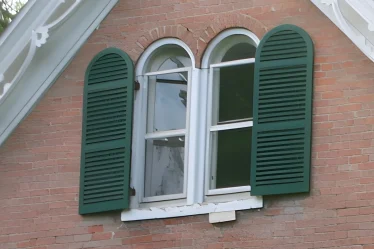
When two very large pairs of shutters won't do because your window is wide try a bifold configuration.  These shutters are mounted with our Acme Lull & Porter Hinges.

Subscribe

Your email:

Latest Posts

Browse by Tag

Posts by Month

Did you know that window shutters were once called blinds whether they were solid panel or louvered?

Have a Question ?

Our website: www.DIYShutters.com / Have a question? 1-800-494-4321 or send an e- to sales@diyshutters.com

Current Articles | RSS Feed RSS Feed

Soup & Nuts, Building a Shutter & Door Business.

Posted by Jewel Foulds on Wed, May 21, 2008 @ 11:51 PM
 | Digg digg it | Reddit reddit | del.icio.us del.icio.us | StumbleUpon StumbleUpon 

Soup & Nuts, Building a Shutter & Door Business.

Kestrel was started entirely from scratch back in 1988 by my partner and me. We began developing some different wood products namely radius arbors, pergolas, for entrance ways and folding screens. We officially opened for business on May 4, 1989 under the name of Kestrel Manufacturing. We decided to focus only on selling folding screens and so we set out advertising them. The folding screens drew reader interest in seeing our advertisements and we began to be flooded with brochure requests through the mail. With one of our folding screen designs being an operable louver shutter style one customer along the way asked us if we would make interior operable louver window shutters for them. One thing led to another and we soon found ourselves in the shutter business. These were the days of paper media as the World Wide Web was not yet commercialized.

Back in the early days of growing this business, "soup and nuts" referenced in the article title refers to dinner meals that my partner and I ate often. That is Lipton Cup of Soup and a piece of rye bread toast with peanut butter. An unusual but rather tasty combination, it was our economical and a quick dinner meal to make in order to just keep working into the night running the shop making the products while saving money to build the business.

We learned a lot making operable louver shutters and in no time we developed our brand which included a knock down shutter kit. We named the product The Original DIY Shutter™ kit. It was developed in order for the end user to paint or stain the shutters easier as well as allowing the end user to save some money by assembling the shutter frames themselves. Since operable louvered shutters were tricky to paint by hand and with the amount of labor involved in assembling the product it was timely to produce. In the early days we would sit hand assembling the components and we realized that anyone could do the same while watching TV. DIY Shutters™ were a smart solution.

Many good opportunities came our way in projects to build and print media articles. The Rich-Twinn Octagon House was one of many historic shutter replications that we furnished. We duplicated several rectangular as well as arched top shutters that featured both horizontal and vertical operable louvers specific to this project.

In 1996 an article was published in the New York Times about shutters and we were listed as a source. Not long after the article in the New York Times, the editors at Martha Stewart Living who read this article all came together with the same idea. The idea was to see if Kestrel could make, of all things, a folding screen. This screen would be one of several varieties shown for an upcoming article about the history of folding screens and their many uses. It was a full page photograph that captured the attention of many. We were right back to the original product that we had started out with. We received many orders thanks to that one article. For many years after the June 1996 issue we worked with several of the editors from Martha Stewart Living to make different items with our basic shutter frames, as well as interior shutters too, that they would need for a variety of their creative and informative articles.


One of these articles would show how to make dot cut outs in the June 2000 issue. It featured a fireside screen with an Art Deco hole cut out pattern made with a basic shutter frame and two bifold pairs of white circle cut out shutters for a kitchen window.


Later that year another article had a clip of our interior shutters in a kitchen room for the article titled 'The Color Blue'. This was in the September 2000 issue.


We even made a shutter that was fitted to make a large mantle top mirror. A duplicate hangs in our office to this day.


The Hollister store was one of several other retail installations that our shutters were produced for to provide the look that they wanted. When the Hollister stores were in the planning stages I went to see the Abercrombie demo store set up with many old, authentic, antiques. Everywhere were antiques such as steamer trunks, carpets and furniture that would all be reproduced to look just as these worn originals for each of the future stores to be built.


Other retail projects have included these louver inserts made years back for a restaurant located in the Las Vegas Bellagio Casino next to the beautiful Murano Glass ceiling. The white louvered wainscot wrap each pillar section rising to the top.


Our goal was to build a business that would provide a great quality product with a good crew of people. Now after all of these years we are looking towards new goals as we keep Kestrel going strong. Since those early days we have added additional product lines to meet the needs of our customers and to diversify the business in making items that would be complementary such as louver inserts, closet doors as well as being the first in producing styles of shutters found only in Europe.


Our shop once consisted of a narrow isle about three to four feet wide in a garage where we made the first orders. All of these years later we have grown and today we now have a considerable amount of shop space. The first pieces of equipment that we owned were a small router and a mitre saw. While we now use specialized equipment to make the product lines faster and better we still hold on to those smaller original pieces which remind us of how it all began.


Photo credits:
Martha Stewart Living Omnimedia, Inc. -Magazine Covers as well as articles
Newstead Historical Society, NY- Rich-Twinn Octagon House
Brendan Smialowski for The New York Times- Hollister store, evoking a beach house.
Also to the customers of Kestrel Shutters & Doors, Inc.


The company name Kestrel is the name for the smallest member in the falcon family. Just recently I took this picture of two Kestrel silhouettes perched in the tree, most likely a male and female.


It was neat to see these two enjoying the evenings amber glow. American Kestrels were once seen in abundance throughout our area but over the last ten years the birds population has declined. What was once common to see these small birds perched on telephone wires along the country roads almost altogether disappeared over the last several years. The good news is that they seem to be on the comeback and I can see evidence of their reappearance in my travels. You can find more information about Kestrels as well as other information about all of the beautiful raptors at Hawk Mountain located in Kempton Pennsylvania. Their website is www.hawkmountain.org


A naturally beautiful and renewable choice- Wood shutters and doors by


Kestrel Shutters & Doors, Inc. www.DIYShutters.com 1-800-494-4321 / sales@diyshutters.com

Now in our 19th Year
May 4, 2008


0 Comments Click here to Read/write comments

Defining the Mortise and Tenon, Old and New

Posted by Jewel Foulds on Wed, Apr 30, 2008 @ 03:14 PM
 | Digg digg it | Reddit reddit | del.icio.us del.icio.us | StumbleUpon StumbleUpon 

Defining the Mortise and Tenon, Old and New

The mortise and tenon joint is one of the oldest methods of joining two pieces of material together and certainly is still very much a mainstay in fine cabinetry work today. There are many references to mortise and tenon joinery throughout the ages. Historical monuments such as Stonehenge, the hulls of early boat and ship vessels, and even Egyptian sarcophagi were made with this frame construction. Whether stone, metal, or wood, the construction method is still very much the same.

The mortise is essentially a slot or a hole cut into or through one piece of material. The tenon is an extension milled onto another piece of material that will be fitted into the mortise. The outer dimension of the tenon matches in both shape and size to the inside dimension of the mortise. When the tenon is inserted into the mortise, the two pieces of material are joined.

In traditional woodworking, door and shutter frame mortises are milled into the vertical inside of each upright frame member. This upright frame member is called a stile. Mortises are placed where horizontal cross rails intersect. Cross rails, or simply rails, are the horizontal frame members. Rails are made over sized in length allowing for the ends to be milled down creating a tenon.

A well made deep fitted mortise and tenon is very strong since there is quite a bit of surface area contact between both pieces of wood. A snug fitting joint is the best as it will help to prevent the frame from racking. With the use of pegs, wedges or both wedges and pegs, as shown in the pictures of the shutters below, the parts are held tightly together creating a fastened joint.


These aged shutters are well over 100 years old. They are great examples to show mortise and tenon construction with the use of both peg and wedge fastening methods.


The shutter frames are fastened together with both pegs and wedges. The wedge is inserted in the opposite side of where the tenon was inserted. The peg is just below my thumb.


I pulled this wedge out for you to see. It is pretty amazing that someone a long time ago cut this and at least 11 more, all fitted perfectly by hand, for each pair of these exterior window shutters.

The mortise shown on these old shutters is called a through-mortise simply because it is open on both sides, milled all the way through the stile. This mortise and tenon was made to fit a wedge. The wedge pinches the tenon into the mortise slot and holds the joint together much like a wedge shape door stop holds a door open or shut.

Through mortises are seen on objects made in periods in time when milling machinery was not available or advanced enough in order to mill the material quickly and easily.

With the advent of machinery, through mortises for the most part were replaced with "pocket" mortises. Pocket mortises are just how the name sounds. The pocket mortise is open on one face only for the tenon to be received.

We have seen wedges used on many old shutters that we reproduced. However, since we use the pocket mortise and tenon method we only need to use pegs. Pocket mortises are very good for outside applications since end grain is not exposed. The reason that end grain should not be exposed is because just like a drinking straw will suck up water so does end grain. End grain is essentially very much like many tiny straws bundled together that supply the tree and it's canopy with water. When end grain is exposed and proper maintenance is not provided it will eventually lead to deterioration.

More then likely these old shutters would still be hanging if they had had just a little more maintenance with finishing as it appears that this paint is the original finish. For being as old as these shutters are they are still held together rather well because of the well made mortise and tenon construction.


Pegs are inserted into a hole that has been drilled through the face of the shutter through the mortise and tenon joint. The peg acts much like a cotter pin locking the two pieces together.


The mortise and tenon joint is a very old construction method and still one of the best woodworking types of joinery today. Our interior shutters, exterior shutters as well as all of our doors are assembled using this method of joinery.


When we assemble door and shutter frames a light application of glue is applied to the mortise and tenon joint areas. Then the parts of the frame are fitted together along with the components that will be inside of the frame such as operable or fixed louvers or even solid wood panels. The shutter or door is then clamped together to tighten and flush all of the joints. When the joints are flush and tight a hole is drilled through the mortise and tenon for the pegs. After the pegs are inserted the joint is now locked together and the clamps are released. At this point this joint can take extreme force and still not pull apart and it will undoubtedly last as long as the old shutters shown in this post, if not longer.

Did you know? Just because a wood product can mention made with “mortise and tenon construction” does not imply that it is good unless it is properly made. When mortise and tenon joints are too loose, improperly fitted, the joint will fail and the frame will rack.

Post written by Jewel Foulds, April 2008


Spring is no doubt one of my favorite things. Nature is fresh and full of color. I was lucky to capture this picture just recently. This spring time beauty known as 'Bleeding Heart' is an Old Fashioned favorite in many gardens.


Kestrel Shutters & Doors, Inc. www.DIYShutters.com

Celebrating our 19th Year in business on May 4, 2008


0 Comments Click here to Read/write comments

Should I go with bifold or sliding closet doors?

Posted by Jim Lapic on Fri, Apr 18, 2008 @ 05:15 PM
 | Digg digg it | Reddit reddit | del.icio.us del.icio.us | StumbleUpon StumbleUpon 

The choice between installing bifold doors and sliding closet doors depends on a few different factors. The use of the closet, the space around the closet, and, of course, your personal preference, are all considerations.

What is the difference between bifold doors and sliding closet doors? The first thing to do is to look at how these two types of doors function. Bifold doors, just as the name implies, are a pair doors that are hinged together and fold up together. This means that you can take all of the doors and fold them up to the sides so that they are out of the way and you have almost full access to your closet. With sliding closet doors the doors slide back and forth on multiple tracks and can be stacked up, one in front of the others. Since the doors never fold out of the way, fully exposing the entire area, there will always be some part of the closet blocked.

Style 6222 - 2.1/2' ' fixed plantation louver bifold closet doors


What is in your closet? Will the closet be for clothes, storage of seasonal items, or used as a pantry? If you will only need to get to one part of the closet at any time then a sliding or a bifold will work well for you. If you need full access to the closet, or you just want to be able to open the doors and see everything at once, then bifold doors are your best choice. Keep in mind that sliding doors can be removed if you should need full access once in a while.


Style 6232 - 2.1/2'' fixed plantation louver over colonial raised panel with trimWhat is around your closet? Is there limited space around your closet? Is there the concern that if you open up the doors they might hit furniture or artwork on your walls? Do you want a streamline fit, rather then doors folding out into the room? If this is the case then sliding closet doors are probably your best option.

Which do you prefer? Another point, just as important as those mentioned above is, simply put, which do you prefer? Even if one of the door installation types is not completely ideal for you, it may still be worth it if you really like the look enough. Regardless of which track hardware you choose, you can still pick whichever style of door you like the most. Every style of door that we offer can be mounted with hardware for either bifold doors or sliding doors .

0 Comments Click here to Read/write comments

What's wrong with how these shutters were installed?

Posted by Jewel Foulds on Fri, Apr 11, 2008 @ 11:36 AM
 | Digg digg it | Reddit reddit | del.icio.us del.icio.us | StumbleUpon StumbleUpon 

In my last post, "Finding a Wood Shutter", I included this picture as shown. While it is a beautiful picture of Kestrel European Board and Batten Shutters with a breadboard top, I noted that there is something wrong with the hardware installation. It will be easier to see if you imagine the shutters closing over the window.

For starters some of the slidebolts were installed on the wrong sides. This is the hardware that is located in the middle of the shutters. When the shutters are closed, the bolt on one shutter slides into the catch on the ajoining shutter to securely lock the shutters closed. The slide bolts would need to be mounted to the outer side of the shutter, not to the inside next to the window as shown on the right in this picture.

The other error that we noticed in looking at this picture is that the shutter dogs, also known as tiebacks, were installed a bit unusual. Most shutter dogs are typically designed to be mounted below the bottom outer corner of the shutter in order to hold the shutter steadfast against the wall. Shutter dogs have a "weighted" or heavier bottom side to allow the piece to stay in an upright position to hold the shutter in positon. These shutter dogs were installed on the vertical sides instead. While the shutter dogs may not function properly if mounted this way, it can still be aestically pleasing. Keep in mind though, that we do have offset shutter dogs available which are designed and weighted for side mount installations.


0 Comments Click here to Read/write comments

Finding a wood shutter

Posted by Jewel Foulds on Fri, Mar 28, 2008 @ 03:31 PM
 | Digg digg it | Reddit reddit | del.icio.us del.icio.us | StumbleUpon StumbleUpon 

Finding a wood shutter supplier with a simple Google search is easy, just be attuned to where and how the shutters are made and with what they made with before you buy. Do your homework by simply asking questions and doing some internet research on the materials and construction methods. There are many types of wood that shutters can be made with but you’ll want to choose the material that is best suited for your installation whether it is inside or out.

Each supplier or direct manufacture should be able to help you with selecting shutter and shutter hardware styles suited for the application and the sizes that you will need. Some companies even offer finishing services from a basic prime to a full finish ready to install. With the different types and styles of shutter hardware that are available your shutters can be fully functional as well as decorative.

Picture at right: Kestrel European Board & Batten with Breadboard top. However, there is something wrong with this install- Do you know what it is? You are welcome to post your answer in the comments section below.

Here at Kestrel Shutters & Doors we have been making both interior and exterior shutters since 1989. We are located in Southeastern Pennsylvania where so many shutters adorn the classic Chester County façade found on many historic homes and sites. The shutter designs that we have chosen as ‘standards’ follow the older shutter styles found not just here in Chester County but also throughout the US and abroad.

The shutters that we build are made entirely by us entirely here in house. We have a very good as well as dedicated team who produce each order. It’s a several step process before each shutter is assembled by hand. The process begins with hand sorting rough lumber for each order and then milling it to size and profile. Through the use of various specialized equipment we then process the milled materials into individual component parts. Where components are joined together we use what is called a mortise and tenon joint construction.


Note: Just because it's mortise and tenon joinery does not imply that it is good unless it's milled correctly. Joints that are loose or secured with screws in the end of the tenon are not as strong and are prone to failure. The best and most historically accurate way to secure a mortise and tenon joint is with a peg that goes through the tenon locking it in place like a cotter pin.

Kestrel mortise and tenon joints fit snugly together and are secured with Honduran Mahogany pegs. The pegs are positioned on the face of each stile according to the size of the tenon.

The hardwood that we use, Basswood and Spanish Cedar, come out of forests that are managed and are harvested responsibly. American Basswood is for interior use and Spanish Cedar is for exterior and interior use. Basswood, known as Linden wood, is used by woodcarvers because of it's many good qualities. The stability, workability, and light patterned even graining is why carvers use it and that is what makes it a great choice in making interior shutters and interior doors, especially those with louvers, since the material holds straight and true. Spanish Cedar is traditionally used in lining cigar boxes and humidors. We began using Spanish Cedar over a decade ago as an alternative to Western Red Cedar because of the consistent quality of the wood that was lacking in Western Red and we found it to be more durable. While Spanish Cedar is predominately used for exterior work because it "breathes" out moisture making it rot resistant, the material also performs very well for interiors too, especially in humid areas where moisture is prevalent. It has also been used as a substitute for Honduran Mahogany since the grain pattern, color and quality are very similar.

Every shutter and door is made to order and available in unfinished wood or completely finished. By choosing full finishing in either paint or stain the shutters are ready for installation once received. However, if you are a DIY, do-it-yourself, kind of person we are the originator of a product called The Original DIY Shutter™ kit.

DIY Shutters™ are the same as our fully assembled version; we just do not assemble them. DIY Shutters™ are an easy to assemble kit to be completed start to finish on site with some general woodworking tools. We developed DIY Shutters just about the same time that the company started. The benefits in a DIY kit is about saving money and a great satisfaction in building your very own top quality shutters.

Did you know? We also offer DIY Shutter™ component parts.

0 Comments Click here to Read/write comments

An open and shut case when it comes to deciding which louver to have.

Posted by Jewel Foulds on Fri, Mar 21, 2008 @ 05:24 PM
 | Digg digg it | Reddit reddit | del.icio.us del.icio.us | StumbleUpon StumbleUpon 

Deciding on a Louver style is a combination of how the louvers will be used, the surrounding décor, and your own personal preference.

First to think about is how will the louvers be used. For both inside and outside applications knowing the purpose of the louvers is helpful to determine if you need fixed or operable louver blades- then you can decide on louver width. Some things to consider when choosing a width are if the louvers are going to be used for privacy, ventilation, and if you will be adjusting them for viewing. If you prefer to have operable louvers, both narrow and wide louver widths will provide privacy when closed. However, a larger louver blade width will have a wider viewing area since each louver is spaced further apart. Also, a wider operable louver blade will allow for greater ventilation since blades can be adjusted to a fully opened position. The opposite is true with our standard fixed louvers. In a smaller stationary louver greater ventilation is achieved because there are more open areas simply because there are more louvers. When louvers are used to hide appliances make sure that you have the required amount of cubic feet per minute, CFM, of air flow. Keep in mind that fixed louvers do not offer complete privacy but if you like the look of louvers and do not have ventilation requirements you could choose a faux louver which will provide privacy with a louvered look.

The next consideration is the surrounding décor. Your home may be anything from Traditional to Contemporary, Cottage to Art Deco but, regardless of styling, any of these could match a narrow louver blade or a wide louver depending on room, window, and furniture proportions. Match the louver size with the scale of what you see. In my last post, “Made to fit vs. Make it fit”, I mentioned proportions and how some are more comfortable then others. For example, a large window with one shutter might not suit smaller louvers but be perfect with wider louvers for a more open and airy appearance. The same window when fitted with several smaller shutters will look proportioned correctly with a smaller louver.

Sample louvers can help you see which looks best for the application if you are just not sure. Much like taping paint color samples onto a wall when deciding on room colors and glancing at them at different times of the day to see which one you like; do the same with louver samples, you’ll know in a matter of days which one is just right for you and your home.

Did you know? Plantation Louvers may give a hint of a Southern style but it is actually just a generic marketing name that refers to an operable louver shutter with a louver blade that is between two to three inches in width. However, you will find that louver blade widths can be dependant throughout regions due to both climate and cultural differences.

Note: If you live in an old historic home then you also need to consider what the home should have. If you are lucky you will have some of the original shutters but if not check other old homes of a similar style nearby that might have their original shutters. Most likely yours had very much the same. The historic commission in your area should also be able to lend some assistance with old photographs.

Louver & Panel combination shutters:

0 Comments Click here to Read/write comments

Made to fit vs. Make it fit.

Posted by Jewel Foulds on Fri, Mar 14, 2008 @ 01:43 AM
 | Digg digg it | Reddit reddit | del.icio.us del.icio.us | StumbleUpon StumbleUpon 

What we have found over the years is that every door or window in a house typically measures differently even if they are suppose to be the same. While you can buy stock sized doors and shutters and build new jamb frames around them for the right fit, there is a substantial difference in a “made to fit” and a “make it fit” scenario if your jamb is already finished out to size. In the “make it fit” application the shutter or door’s outer frame, the rails and stiles, are cut down which can skew the frame dimensions out of proportion. There can also be a loss of joint strength when top and bottom rails are trimmed. In most cases customers are remodeling or fitting openings that have already been finish framed and really do need a made to measure or “made to fit” product and this is why:

What you think you won’t notice usually does pop out like a sore thumb if it is not proportioned right. There are good ratios to size combinations that just look more comfortable then others and this is one of our goals in making each order. My company looks at these ratios in the preliminary stages rather then just loading widths and heights and cutting wood and then trimming the door or shutter down to size disregarding symmetry and balance.

With quick sketches produced by the help of Computer Aided Drafting, simply known as CAD, we as well as the customer are able to see what the end result will be before we even cut any wood. Knowing room locations and usages we are then able to scale in proportions through the varying widths and heights of each opening. This way there is a perfect frame fit both visually and structurally from opening to opening, room to room, that is pleasing to the eye. It’s the difference in buying a true millhouse wood product like ours vs. the production line cookie cutout.

We made these Plantation Shutters out of White Oak and they were installed inside the lounges of a cruise ship that is currently under construction in the Mediterranean. The louvers are tapered and include our signature brass eyelet, tilt bar to louver, linkage.


Did you know? When reviewing line sketches that are supplied by manufactures make sure that they are actual take offs from your measurements. Many drawings are only line sketches showing strictly style types and are not meant to be an actual scaled drawing.

Note: If you do need scaled drawings from the manufacture do keep in mind that they may be billable.


0 Comments Click here to Read/write comments

A new use for old shutter samples

Posted by Jewel Foulds on Fri, Mar 07, 2008 @ 10:19 AM
 | Digg digg it | Reddit reddit | del.icio.us del.icio.us | StumbleUpon StumbleUpon 

These old retired shutter samples are a perfect fireside seat.   

0 Comments Click here to Read/write comments

Tags: 

What weekend projects could you do to add value to your home but best of all add beneficial comfort?

Posted by Jewel Foulds on Thu, Feb 28, 2008 @ 12:19 PM
 | Digg digg it | Reddit reddit | del.icio.us del.icio.us | StumbleUpon StumbleUpon 

With my fuel bills now at least double what they were two to three years ago I have an idea that this year I will reinstall exterior shutters on this old home that I live in and shut them during the winter on the prevailing wind side.  My farm house once had them as most old houses do for very much the same reasons that I am trying to achieve- security and heat conservation. During the winter months the shutters will be drawn over the front roadside windows to insulate against the cold.  I usually keep curtains drawn over these windows for privacy and to help keep the warmth and coziness inside. 

Having the windows shuttered will be a comforting sense of security to me when I step inside my home on a cold windy night.  When spring arrives the shutters will be opened and latched back to the stone facade with a fanciful tie back, also known as a shutter dog.  During the summer months, should it be hot, I will be able to use the louvers selectively to keep the sun's heat at bay.  And whatever the season a removable window box at each sill will accent the shutters charm with greens in the winter and floral décor the rest of the year.

Wood is such a great, renewable and natural, insulator.  Adding wood shutters provides a classic window dressing that most definitely will help in keeping the warmth inside your home during the cold winter months and the sun’s heat moderated come summertime.  With conservation in energy equaling conservation to the environment by reduction of “green house gases” you will be helping to turn your house into a “green” house with a beautiful window treatment all year round.  In the long run you will also save money for your piggy bank rather then just literally burn it up in rising fuel costs.  Saving money is always good.

So, what weekend project could you do to add value to your home but best of all add comfort?  Build and install something that will last you and your home a lifetime or more while providing all those years many positive and beneficial uses.  

Written by Jewel A. Foulds
February 23, 2008

Did you know that an average home may loose 30% of its heat or air-conditioning energy through its windows?

0 Comments Click here to Read/write comments

Of Aqua Dots & Shutter Paint

Posted by Jim Lapic on Tue, Dec 04, 2007 @ 09:09 PM
 | Digg digg it | Reddit reddit | del.icio.us del.icio.us | StumbleUpon StumbleUpon 
Don’t judge a book by its cover. We have all heard this numerous times in our life and yet we still let ourselves be surprised when something is not as it seems. It is that mouth watering piece of moist, dark chocolate cake that, sadly enough, turns out to be some bizarre experiment in carob meets soy paste. Recently it was Aqua Dots, a cool looking toy and craft for small children that has since been recalled because it contains a variation of the date rape drug. Whoops!

Sometimes it is mass produced shutters, many made in China, that are finished with what we assume (and hope!) is a non toxic paint and sold on web sites and in American home centers. Granted they do look nice but then again, what wouldn’t? How many curb appeal type shows have we all seen where they stress putting on fresh coats of paint to hide poor workmanship just to make it easier to sell your home. Because it looks shiny and new doesn’t mean it was made well.

When buying shutters, whether they are for the interior or exterior of your home, spend some time “kicking the tires” so to speak.

Is the wood a solid hardwood or finger jointed drop off?
Is the joinery traditional pegged, mortise and tenon or do they cut corners by using dowels and screws?
Are the operable louver self balancing so they stay in any position you place them or do they rely on a mechanical tension screw that you need to adjust every time the humidity in your home changes?
Do the fixed louvers and panels float to allow for expansion and contraction?
Are the operable louvers attached with solid brass screw eyes that cannot fall out or do they use staples that will, sooner or later, fail?

Really, the idea is to try to learn as much as you can about your shutters before you buy them. Get samples from each company and compare. Does the shutter feel substantial in your hands or are you afraid that one good sneeze might tear it apart? Look behind that pretty white paint and golden oak stain and see for yourself whether your shutter is really a shutter, or is it just a lemon.

0 Comments Click here to Read/write comments

| Next Page

Have a question?

© 2008 diyshutters.huspot.com