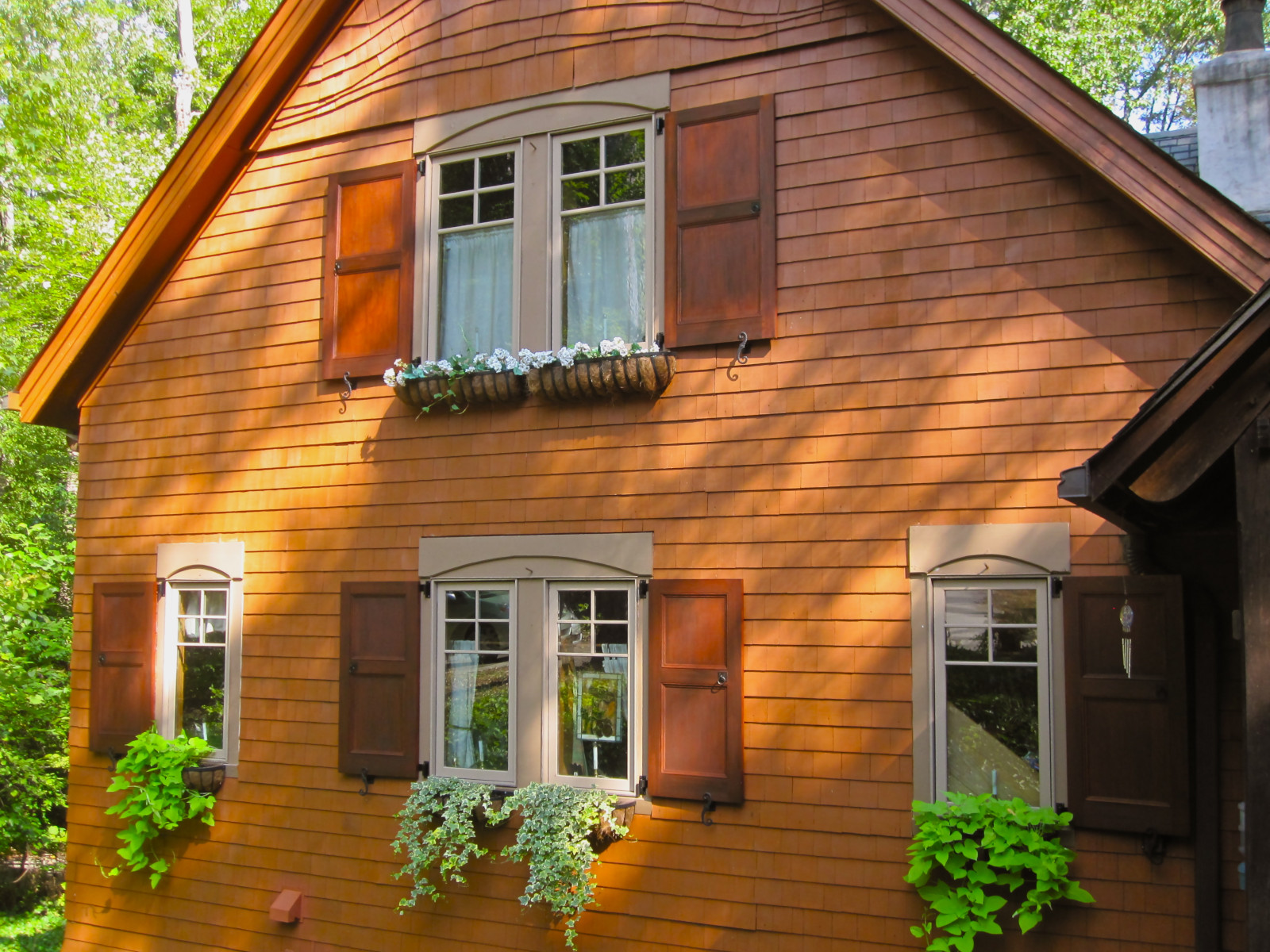
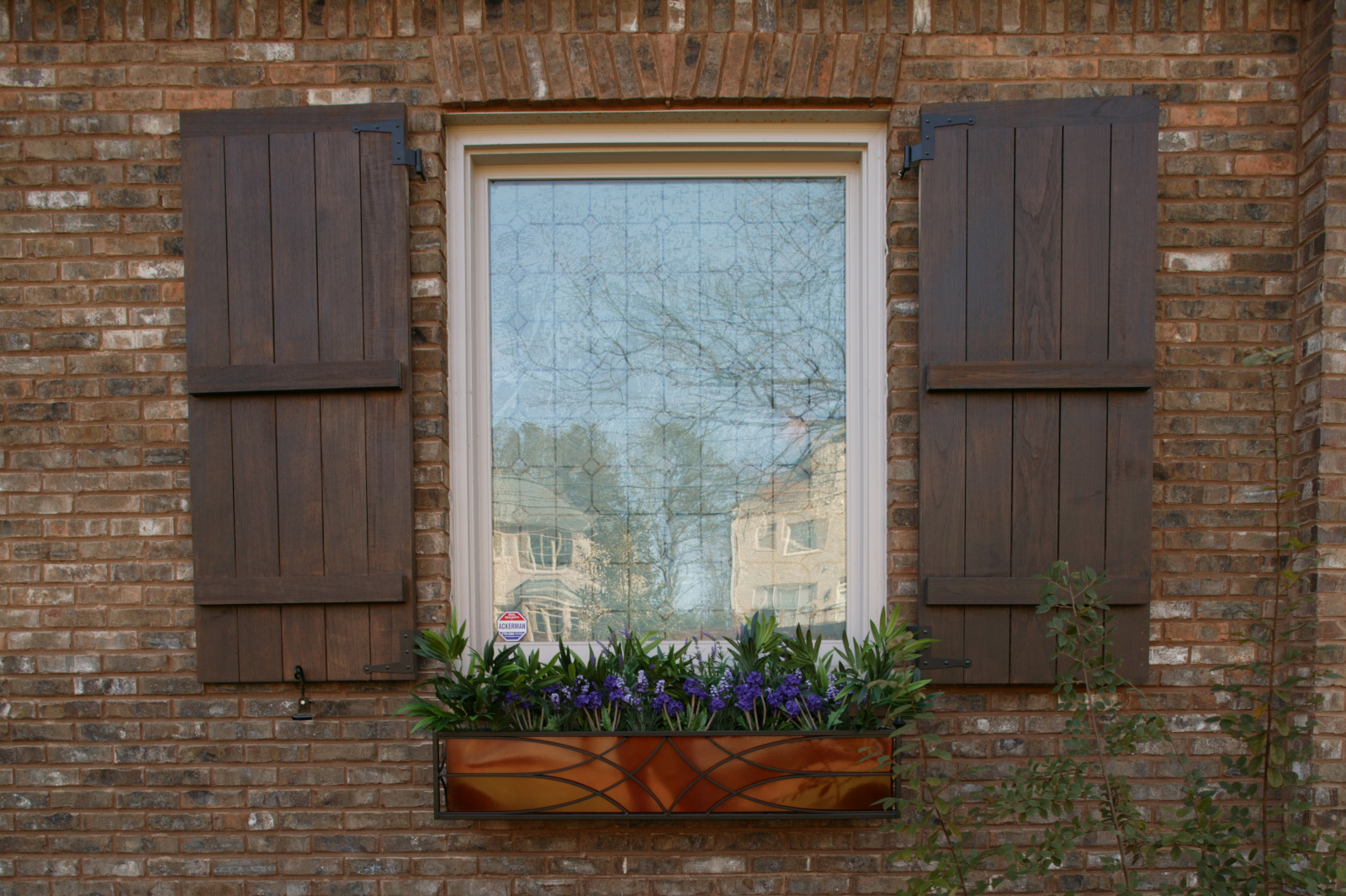
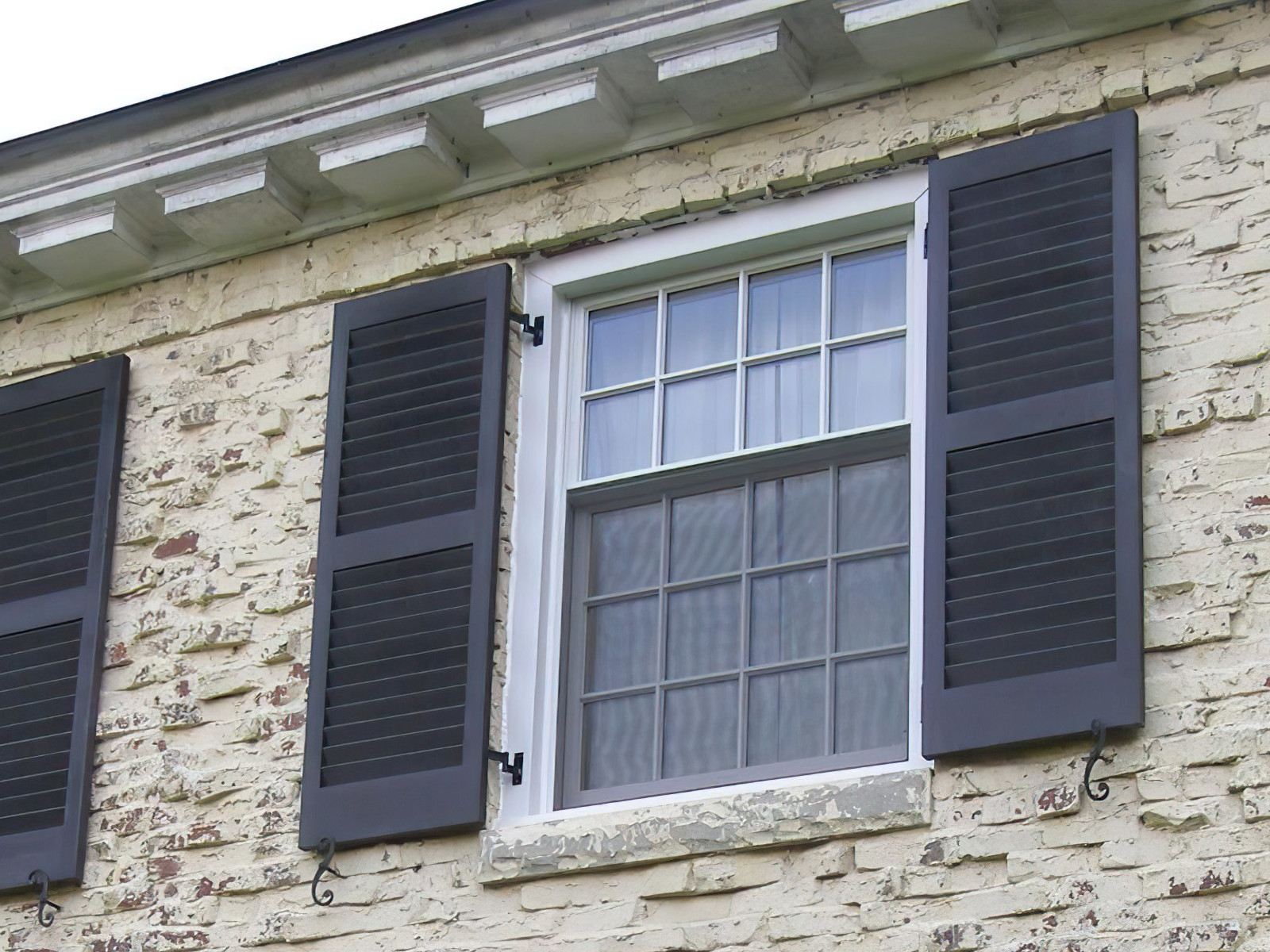
Our next post…
Can I Combine Different Door Styles?
hinged closet doors

Do you need help with finding the right design for your interior or exterior shutters or even your interior doors?  We can help.

Subscribe
Browse Older Posts by Category
        ShareThis

Posts Tagged ‘Exterior Shutter Hardware’

If you want your exterior shutters to be able to open and close properly over your windows, you need to make sure that you choose the correct exterior shutter hardware. This can be a bit confusing as every window and window frame is different. Even if you have the same style of trim on all of your windows don’t be surprised if some of the measurements are slightly different.

Throughout the Fall I will be writing articles on how to choose the correct exterior shutter hardware to make your shutters functional…or simply look functional.

This article will cover the types of hinges that are available.   At the bottom of this article is a Summary which has some Quick Reference tables that you can use.  If you are already familiar with exterior shutter hardware, feel free to skip directly down to the Summary.  You will also find some pictures showing different types of installations.

Types of Exterior Shutter Hinges

1. Straight Strap
2. L Strap
3. Plate
4. Mortised
exterior shutters - strap hinge exterior shutters - L hinge exterior shutters - plate hinge exterior shutters - mortise hinge

Exterior shutter hinges can be broken into two groups; surface mounted and edge mounted. Surface mounted hinges are typically installed on the back of the shutters. These can include (1) straight straps, (2) L straps and (3) plate shutter hardware. Bahama shutter hinges (not shown) are also surface mounted but attach at the top front face of the shutters. Surface hinges can mount onto your house with either a plate pintle or with a lag bolt pintle. Edge mounted hinges (4) are mortised into the edge of the exterior shutter closest to the window and look similar to a door hinge.

Closed Position for Your Shutters

5. Inside Mount –
Window frame shown in Green
6. Overlap Mount -
Shutters overlay opening so no frame is exposed
overlap mount for exterior shutters

The first thing that you need to decide is where the shutters will sit when closed over your window. Exterior shutters can be mounted to fit within your window frame and/or jamb (see diagram 5 above – inside mount) or to completely cover your window frame (see diagram 6 above – overlap mount). Most often shutters are mounted as an inside mount. This is because with an inside mount installation, exterior shutters are seated and secured within the frame when the shutters are closed.  More resistance to high winds is achieved because the wind cannot “lift” the shutter off like a kite in the wind.  Also, inside mount installations will help prevent break-ins as the shutters cannot be lifted off the hinges when closed properly. The reason you would use an overlap mount is if you were using Bahama shutter hardware or if there was not enough depth for the shutters to sit within the window frame and/or jamb.

Inside Mount for Exterior Shutters (see diagram 5)

If you are using an inside mount take a look at where your shutters will sit within the window opening when closed. You need to know what the material is that will be around your closed shutters. (This is shown in green in diagram 5 above) If this is framed in wood that is deep enough to hold your shutters then you can use either surface mounted hinges or edge mounted hinges. If the opening is a material other than wood, such as brick, vinyl or stone, then you will need to use a surface mounted hinge.

Overlap Mount for Exterior Shutters (see diagram 6)

If your shutters will be overlapping your window opening, so that there is no window frame visible, the most practical option is to use a surface mounted hinge. These can be any strap or plate hinge mounted to the sides or Bahama shutter hinges mounted at the top.

Hinge Mounting Method

If you are using surface mounted exterior shutter hinges you need to decide where you can mount the hinge pintle. This will determine whether you need to use a plate pintle with screws or a lag bolt pintle. If you are able to mount the hinge pintle directly onto the flat surface of your wood trim or wood frame (shown in green in diagram 5) you will be able to use a plate pintle. If you need to mount the hinge pintle onto some other material like brick or stone you will need to use a lag bolt pintle.

Once you know the type of exterior shutter hinge and pintle you will need to determine the offset. This will be covered in next blog post.

Summary  / Quick Reference

To help choose the type of hinges you will need to mount your exterior shutters follow these 4 steps.

Step 1. Determine whether you have an inside mount (see diagram 5 above) or an overlap mount (see diagram 6 above).

Step 2. Look at the building material around your window opening and, using Table A below, find out whether you need a surface mounted hinge or an edge mounted hinge.

Step 3. Look at the building material where you will be mounting your hinges and, using Table B below, find out the type of mounting method you will need to use.

Step 4. Using Table C below look for a hinge that meets your requirements for hinge type (step 2) and for mounting method (step 3).  You can see the available hinges pictured above (pictures 1,2,3 and 4) to help decide the look you want.

Hinge Type – Table A

Use this table for quick reference for determining hinge type

Closed Position Material Around Opening Hinge Type to Use
Inside Mount Wood Surface or edge mounted
Inside Mount Brick Surface mounted
Inside Mount Stone Surface mounted
Inside Mount Vinyl Surface mounted
Inside Mount Stucco or other veneer Surface mounted
Outside Mount Any Surface mounted

Hinge Mount – Table B

Use this table for quick reference for to determine the type of pintle to use with your surface mounted hinges

Material Pintles Are to be Mounted To Use This Pintle
Wood (flat surface) Plate Pintle with screws
Wood (non-flat surface) Lag Bolt Pintle
Brick Lag Bolt Pintle
Stone Lag Bolt Pintle
Vinyl Lag Bolt Pintle
Stucco or other veneer Lag Bolt Pintle

Available Hinges – Table C

This next table will list different hinges and the mounts available.

Hinge Type Item Codes Available Mounts
Edge Mounted
HE1-401 Edge Mounted
HE1-405 Edge Mounted
HE3-370 Edge Mounted
Straight Strap HE1-701 Plate Pintle with screws OR Lag Bolt Pintle
HE1-702 Plate Pintle with screws OR Lag Bolt Pintle
HE1-705 Plate Pintle with screws OR Lag Bolt Pintle
HE2-10 Plate Pintle with screws OR Lag Bolt Pintle
HE6-4000 Plate Pintle with screws OR Lag Bolt Pintle
L Strap HE2-40 Plate Pintle with screws OR Lag Bolt Pintle
HE6-2000 Plate Pintle with screws OR Lag Bolt Pintle
Plate HE3-321 Plate Pintle with screws
HE3-323 Plate Pintle with screws
HE5-670 Plate Pintle with screws


Mounting Examples

The following photos show some different mounting methods used on different buildings.

Exterior shutters in Berks County, PennsylvaniaPennsylvania - Stucco face – inside mount – wood frame – surface mounted plate pintle with screws.


Exterior Shutters on St. Croix USVISt. Croix USVI – Stucco face – inside mount – no frame – lag bolt pintle mounted through the stucco.


Exterior Bahamas ShuttersCalifornia - Concrete face – overlap mount – surface mounted Bahama shutter hardware

European Board & Batten Shutters with Diamond CutoutsBelgium - Stone face – inside mount – stone window frame – lag bolt pintles


Exterior Plantation ShuttersWest Virginia – Stucco over brick face – inside mount – wood frame – surface mounted plate pintles with screws.


Kestrel Shutters & Doors

A naturally beautiful and renewable choice – Wood shutters and doors by

Kestrel Shutters & Doors, Inc. www.DIYShutters.com 1-800-494-4321 / sales@diyshutters.com


In my last post, “Finding a Wood Shutter”, I included this picture as shown. While it is a beautiful picture of Kestrel European Board and Batten Shutters with a breadboard top, I noted that there is something wrong with the hardware installation. It will be easier to see if you imagine the shutters closing over the window.

For starters some of the slidebolts were installed on the wrong sides. This is the hardware that is located in the middle of the shutters. When the shutters are closed, the bolt on one shutter slides into the catch on the ajoining shutter to securely lock the shutters closed. The slide bolts would need to be mounted to the outer side of the shutter, not to the inside next to the window as shown on the right in this picture.

The other error that we noticed in looking at this picture is that the shutter dogs, also known as tiebacks, were installed a bit unusual. Most shutter dogs are typically designed to be mounted below the bottom outer corner of the shutter in order to hold the shutter steadfast against the wall. Shutter dogs have a “weighted” or heavier bottom side to allow the piece to stay in an upright position to hold the shutter in positon. These shutter dogs were installed on the vertical sides instead. While the shutter dogs may not function properly if mounted this way, it can still be aestically pleasing. Keep in mind though, that we do have offset shutter dogs available which are designed and weighted for side mount installations.

Kestrel Shutters & Doors

A naturally beautiful and renewable choice – Wood shutters and doors by

Kestrel Shutters & Doors, Inc. www.DIYShutters.com 1-800-494-4321 / sales@diyshutters.com


This is a very common question and one where the answer really depends on how you plan to use your shutters. Will you be closing them daily to help insulate your home or only for the next hurricane? Maybe your shutters will be strictly decorative.

As a general rule of thumb there are two reasons why you will need hardware for your shutters. One is that you need the shutters to function and the other is that you simply want your shutters to look like they function.

Exterior shutter hardware is broken down in to 4 types of pieces: hinges, shutter dogs, security and pulls. Even if you need, or want, exterior shutter hardware you may not need all the different pieces.

Hinges: These would be needed when you want to be able to open and close the shutters, or easily remove the shutters from the house. These include both surface mounted strap hinges and edge mortised hinges. One big benefit of using hinges, even if the shutters are just for show, is that they will hold the shutters at an angle to the house which is traditional. One of the biggest mistakes people make when installing shutters is to fix them flat against the face of the house. A working shutter, on hinges, would always be sticking out along the window side by an inch or more.

Shutters Dogs: Also called “shutter holdbacks”, “shutter stops” and “shutter ties”. These are used to hold the shutters open against the face of the house. If you plan to open and close your shutters these are a must. They are available in many different styles including the most commonly found S-curve shape as well as whimsical dolphins, traditional English rat tails and a Little French Girl design. Even if you do not plan to use your shutters you should consider using shutter dogs. It is a simple way to add a decorative touch while giving the appearance of working shutters.

Security: If you are going to close your shutters for storm protection, or for security, you will need a way to keep them closed. There are a few ways to do this. The most common in the United States is a slide bolt. In Europe you will find cremone bolts used to lock shutters. Both of these are decorative and functional. Another more rustic option are the bar staples which are heavy pieces of steel that hold a 2 x 4 to secure the shutters.

Ring Pulls: These are small rings, mounted to the outer edge of the shutters, used to make it easier for the homeowner to pull the shutters closed from inside the house. If you plan to close your shutters often this is definitely something to consider.

So if your shutters will be fully functioning you will need hinges, shutter dogs and something to secure the shutters when closed. Depending on how often you will close your shutters you could optionally add ring pulls. If the shutters are only for decoration then which pieces of hardware to add is purely a matter of personal preference.

Kestrel Shutters & Doors

A naturally beautiful and renewable choice – Wood shutters and doors by

Kestrel Shutters & Doors, Inc. www.DIYShutters.com 1-800-494-4321 / sales@diyshutters.com


Subscribe